Ingredient profile
Asian Ginseng in GlucoZen: A Small Share of a Root With Mixed Evidence
Asian ginseng root extract (Panax ginseng) is 12th of 22 ingredients in GlucoZen's 200 mg blend. That limits it to about 17 mg per 1 mL, or 33 mg a day, best case. NCCIH says it might lower blood sugar but calls the diabetes evidence inconclusive (NCCIH: Asian ginseng). It may interfere with blood clotting and interact with medicines.
Written by the Myglucozen editorial teamUpdated
The basics
What is Asian ginseng?
Asian ginseng is the root of Panax ginseng, a plant long used as a traditional tonic. GlucoZen lists it as "Asian Ginseng (root) extract (Panax ginseng)," 12th in its proprietary blend.
The name "ginseng" covers more than one plant. GlucoZen also contains eleuthero root, which some sources call Siberian ginseng (MSKCC: Siberian ginseng (eleuthero)). The label prints the two as separate ingredients, and they have separate research records.
| Label name | Asian Ginseng (root) extract (Panax ginseng) |
|---|---|
| What it is | Panax ginseng, root extract |
| Position on the label | 12 of 22 in the blend |
| Per 1 mL serving | At most about 17 mg (33 mg a day at 2 servings) |
| Amount used in research | Doses vary; NCCIH calls diabetes evidence inconclusive |
| Strength of evidence | Inconclusive |
| Main use studied | Traditional root tonic studied for blood sugar |
| Main caution | Might lower blood sugar, may interfere with blood clotting and interact with medicines; may be unsafe in pregnancy. |
What studies found
Does Asian ginseng help blood sugar?
The answer is unclear. NCCIH says Asian ginseng "might lower blood sugar levels," yet it rates the diabetes evidence as inconclusive (NCCIH: Asian ginseng).
What looked promising
A 2022 review pooled 20 studies and reported better fasting glucose with Asian ginseng (NCCIH: Asian ginseng). That is a real signal, and it is why the root shows up in glucose formulas.
Why experts hold back
NCCIH still calls the evidence inconclusive (NCCIH: Asian ginseng). Its diabetes and supplements guide adds that ginseng has not been proven effective (NCCIH: Diabetes and dietary supplements).
None of those studies tested GlucoZen. They tested ginseng, alone or in its own products. A pooled result for one root cannot tell you what a 22-ingredient liquid blend will do.
Blend math
How much Asian ginseng is in a GlucoZen serving?
No more than about 17 mg per 1 mL, and probably less.
Ginseng is 12th by weight, so its share is capped at 200 mg divided by 12. That works out to about 17 mg per serving and 33 mg across a day of two servings. Eleven ingredients come before it, with maca at the front.
- 200 mg
The whole proprietary blend in 1 mL. The label lists 22 ingredients, heaviest first, with no single amounts (FDA Labeling Guide Ch. IV: proprietary blends).
- about 9 mg
The average share if all 22 weighed the same: 200 divided by 22. Most real blends are uneven, so the first few are larger.
- 200 / k
The k-th ingredient can weigh at most 200 divided by k. Maca, 1st, can be up to 200 mg; gymnema, 8th, at most 25 mg; L-carnitine, 22nd, at most about 9 mg.
The most each ingredient can weigh in one 1 mL serving
- Maca≤ 200 mg
- Grape seed≤ 100 mg
- Guarana≤ 67 mg
- African mango≤ 50 mg
- Eleuthero≤ 40 mg
- Astragalus≤ 33 mg
- Green tea≤ 29 mg
- Gymnema≤ 25 mg
- Asian ginseng≤ 17 mg
- L-carnitine (22nd)≤ 9 mg
Best case, worked out from label order alone. Two servings a day doubles each figure. Chromium is separate: 0.7 mcg per serving (NIH ODS: Chromium fact sheet).
NCCIH does not name one standard ginseng dose; studies used varied amounts (NCCIH: Asian ginseng). So the honest comparison is with the blend itself. Ginseng's ceiling is less than a tenth of the 200 mg total.
Side by side
Asian ginseng vs eleuthero: the two ginseng-type roots in GlucoZen
Eleuthero sits higher on the label, 5th, so it can weigh more than Asian ginseng. Its human research is thinner, though, and its interaction notes differ.
| Point | Asian ginseng | Eleuthero ("Siberian ginseng") |
|---|---|---|
| Label position | 12 of 22 | 5 of 22 |
| Most per 1 mL | About 17 mg | 40 mg |
| Most per day | About 33 mg | 80 mg |
| Blood sugar research | 2022 review of 20 studies; still inconclusive | Effects seen in animal studies; human studies "quite limited" |
| Medicine notes | May interfere with blood clotting; may interact with medicines | Has raised, or falsely raised, digoxin levels |
| Pregnancy | May be unsafe | Not published in our source |
If you take digoxin, the eleuthero row matters as much as the ginseng row. Our medicines and GlucoZen guide collects these notes for the whole blend.
Time limit
How long is Asian ginseng considered safe to take?
NCCIH considers Asian ginseng safe for up to 6 months (NCCIH: Asian ginseng). That window is about research coverage, and it says nothing about results.
At 1 mL twice a day, one GlucoZen bottle lasts 30 days. The largest pack, 6 bottles, covers about 180 days. That lines up with the 6-month span NCCIH describes. Beyond that point, ask your doctor before you keep going.
| 2 bottles | About 60 days |
|---|---|
| 3 bottles | About 90 days |
| 6 bottles | About 180 days, near the 6-month mark |
Pack prices appear only at checkout; see the pack options.
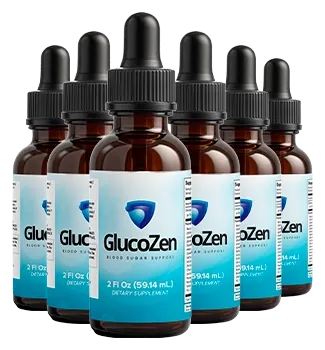
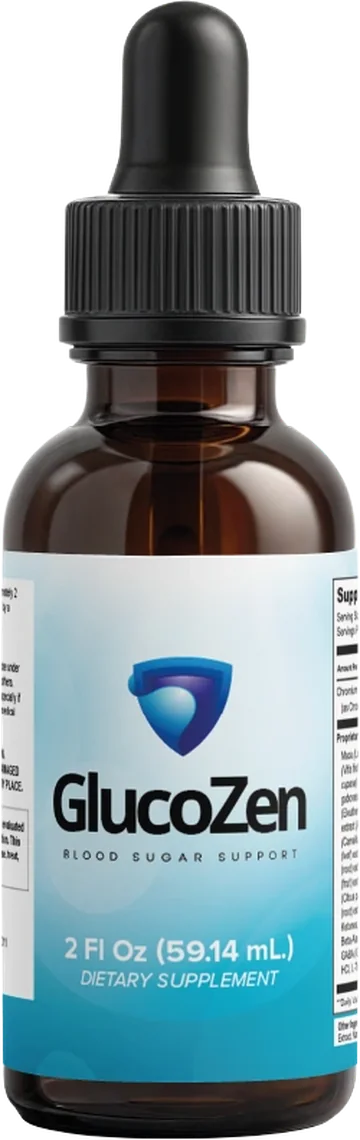
Try GlucoZen for 60 days1 mL twice a day · 30 days per bottle · price shown at secure checkout
Order nowCautions
Who should check with a doctor before taking ginseng?
NCCIH lists three cautions for Asian ginseng (NCCIH: Asian ginseng). Each one below applies to GlucoZen, because ginseng is in the blend.
Asian ginseng might lower blood sugar. If you use insulin or any glucose-lowering drug, get your doctor's advice before adding it.
Ginseng may interfere with blood clotting and may interact with medicines. Show your pharmacist the full label if you take any prescription.
Ginseng may be unsafe in pregnancy. The GlucoZen label already rules out use by pregnant or nursing mothers.
Label vs marketing
Why doesn't the brand's ingredient graphic show ginseng?

The "Inside GlucoZen" graphic and the brand info page describe a different formula. They list Okinawa honey, berberine, cinnamon bark, resveratrol, turmeric and two probiotics. The bottle label lists none of them.
The label does list Asian ginseng, along with 21 other blend ingredients. We follow the label. Check the Supplement Facts on the bottle you receive, and read our label vs marketing explainer for the full comparison.
Bottom line
What does Asian ginseng add to GlucoZen?
A familiar root, in a small amount, with evidence that experts still call inconclusive. It is a reasonable ingredient to see on a label, but it is not proof the product works.
- Listed by name and Latin name, so you know the species
- Capped at about 17 mg per serving by its label position
- Comes with real medicine cautions worth a pharmacist check
Compare it with the other blood sugar herb in the blend on the gymnema profile, or step through every ingredient below.
FAQ
Asian ginseng in GlucoZen: common questions
How much Asian ginseng is in GlucoZen?
No single amount is printed. Asian ginseng is 12th of 22 ingredients in a 200 mg blend, so it can weigh at most about 17 mg per 1 mL. Two servings a day bring the best case to about 33 mg. The actual amount could be lower.
Does Panax ginseng lower blood sugar?
It might. NCCIH says Asian ginseng might lower blood sugar levels, and a 2022 review of 20 studies reported better fasting glucose. Even so, NCCIH calls the diabetes evidence inconclusive, and its diabetes guide says ginseng has not been proven effective.
Is Asian ginseng the same as Siberian ginseng?
No. Asian ginseng is Panax ginseng root. Siberian ginseng is another name for eleuthero, a separate root. GlucoZen contains both: eleuthero is 5th on the label, and Asian ginseng is 12th. Their research and interaction notes are different.
How long is Asian ginseng safe to take?
NCCIH considers Asian ginseng safe for up to 6 months. At the GlucoZen label dose, a 6-bottle pack lasts about 180 days, which is close to that limit. If you want to continue past 6 months, talk with your doctor first.
Can ginseng affect blood thinners or other medicines?
NCCIH says Asian ginseng may interfere with blood clotting and may interact with medicines. If you take a blood thinner or any prescription drug, show the GlucoZen label to your pharmacist before starting. Do not change your medicine on your own.
Can you take Asian ginseng while pregnant?
NCCIH says Asian ginseng may be unsafe during pregnancy. The GlucoZen label separately states that the product is not for pregnant or nursing mothers, or for anyone under 18. Talk to your doctor about any supplement during pregnancy.
Why is ginseng missing from the Inside GlucoZen graphic?
The graphic shows a different formula from the bottle. It pictures berberine, cinnamon, honey and probiotics, none of which are on the label, and it leaves out ginseng, which is. We follow the printed Supplement Facts and suggest you check the bottle you receive.
Who wrote this
Written and reviewed by
A small team that reads the bottle label line by line, checks every number against public health sources (NIH, NCCIH, NIDDK, CDC, ADA, FDA, FTC) and rewrites it in plain English. We do not write for the manufacturer, and we update a page whenever the label, the prices or the evidence changes.
Last updated . See our editorial standards and how we check reviews. This website is run by a U.S. stocking partner, not by the manufacturer. We earn a commission when you order through our links.
Keep reading
More about GlucoZen
Label vs marketing
Why the GlucoZen bottle and the brand marketing list different ingredients and doses, and which one to follow.
Read more
Medicines and GlucoZen
A medicine-by-medicine check of GlucoZen's blend, with the questions worth asking your pharmacist.
Read more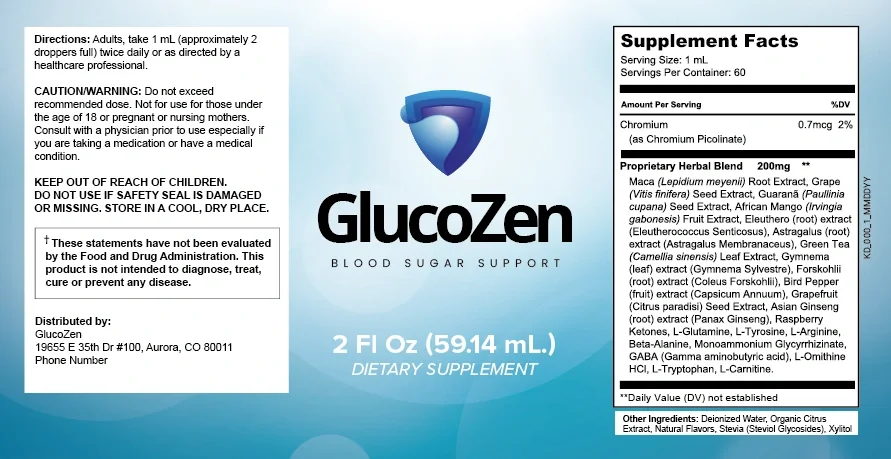
Side effects
Ingredient-by-ingredient side effects, warning signs to act on, and who should not take the drops.
Read moreU.S. stocking partner for GlucoZen
Ready to try GlucoZen?
Pick a pack. Every pack lasts at least 60 days at the label dose, the whole money-back window.
- Secure checkout
- 60-day money-back guarantee
- Ships from the U.S.